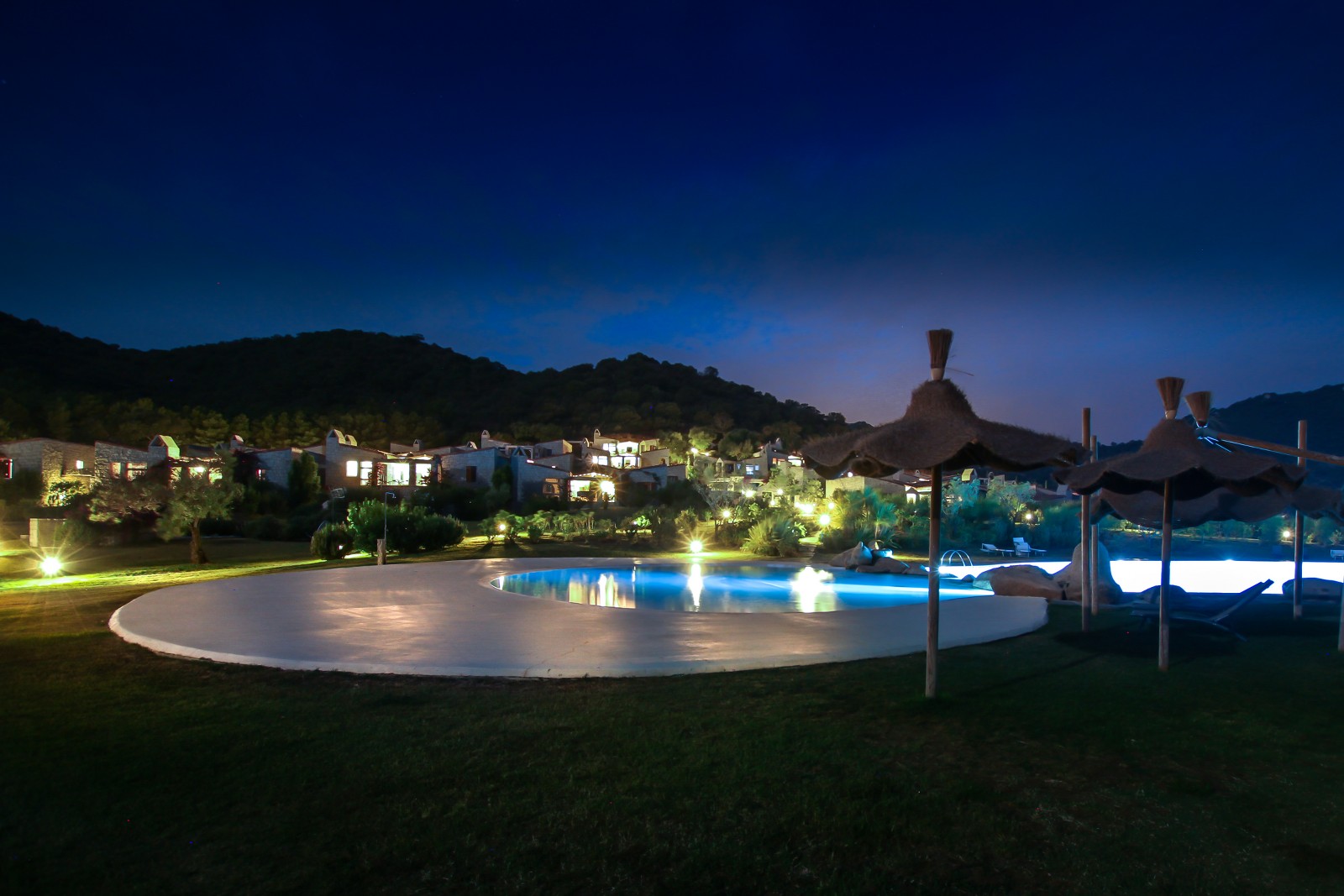
THE LI CONCHI PROJECT BY ARCH. SONZOGNI
Zogno (Bergamo) 1924 - 2017
Architect Vittorio (known as Vito) Sonzogni, graduated in Architecture at the Milan Polytechnic in 1952, starting in the same year an intense professional activity which he mainly carries out in Bergamo and its province with reference to urban planning, religious and residential architecture and design of public buildings and tourist centers. In the 1950s, paying attention to the spatial and expressive potential of exposed reinforced concrete, he created the sanctuary of Zogno, the parishes of Castro, Monterosso and the underground church of Zingonia.
In the early 1960s, with Giuseppe Pizzigoni, he tackled the design of the new Episcopal Seminary in the upper town of Bergamo. He built eighteen new churches and adapted many others to the new conciliar provisions.In the public buildings sector, his activity is equally conspicuous: he builds twenty-two school buildings in the province of Bergamo, making use of the study experience of the vast school building plan launched in Germany after World War II; builds the municipal offices of Serina, Villa d’Ogna and Castione and in Bergamo the offices of numerous credit institutions and large residential, office and commercial complexes.In the urban planning field, in addition to the drafting of general regulatory plans, recovery plans and detailed plans for numerous municipalities in the Bergamo area, in the fifties and sixties, he promoted the Edil-Dalmine initiative, equipping over three hundred families with accommodation. In Sardinia he builds two tourist villages with residential units in granite and in Tuscany he participates with Ignazio Gardella and Ludovico Quaroni in the design of the tourist center of Punta Ala.
Alongside his professional work, he also has an important activity in the public administration: he was councilor for Public Works of the Province of Bergamo, president of the Autonomous Housing Institute of Bergamo, councilor for Transport, Public Works and Urban Planning of the Lombardy Region.News taken from: “The architecture archives in Lombardy. Census of sources ", by G.L. Ciagà, published in 2003 by the Center for Advanced Studies on Visual Arts, with the collaboration of the Archival Superintendency of Lombardy and the Polytechnic University of Milan).
LI CONCHI STUDY PROJECT
Some Sardinian coasts welcome settlements lacking the necessary strength to send a message of coherence and homogeneity in a habitat of powerful and delicate beauty. Sometimes, stones are humiliated to the role of "appearing" without "being" primary in the role of proud protagonists of structural statics.
Architecture takes place with simplicity if the materials are native and if the urban layout is designed to be possessed by nature without forced modernity.
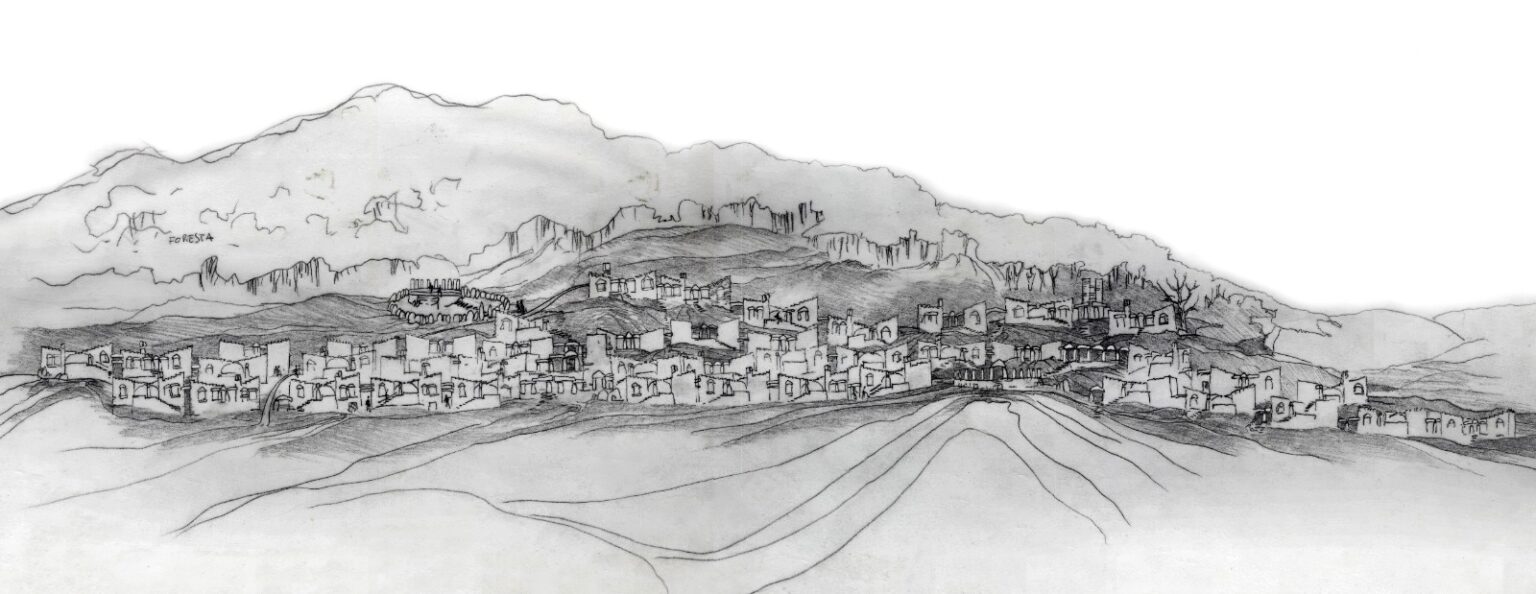
The proposed settlement seeks the pleasant union between environment and architecture with the aim of recovering the historical dimension of the place with attention to the typologies and materials of the Nuragic and Roman civilization.
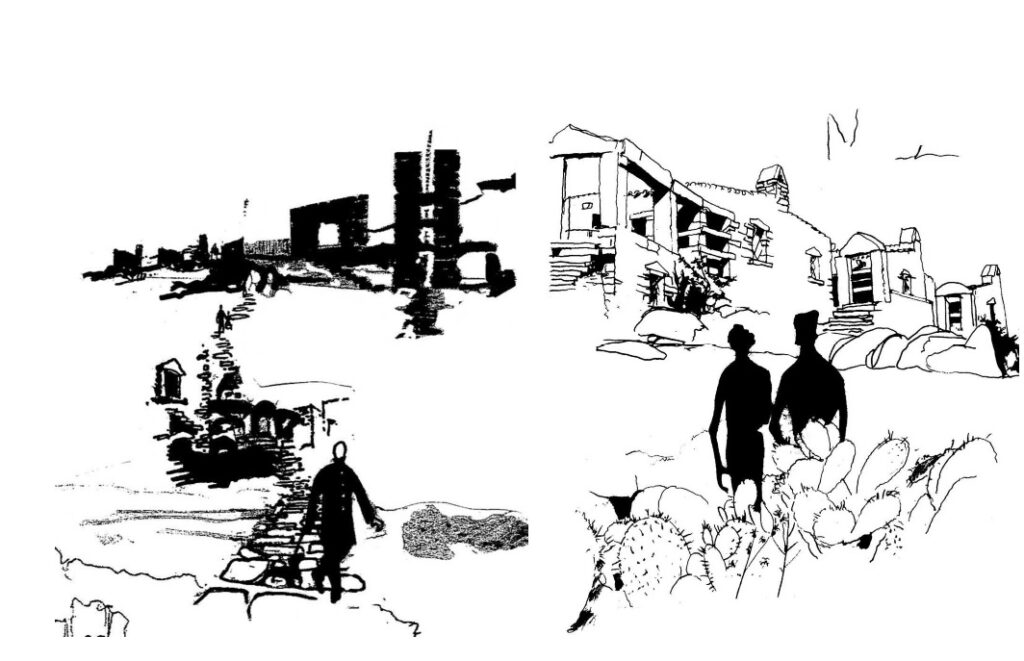
The distinctive feature of the village is the widespread use of exposed stone and "trilite". In homes, monolithic stones give the work stability, energy, warmth, tension and poetic transfigurability. Their use re-proposes the ancestral architecture of Sardinian stone.
CONSTRUCTION DETAILS
An in-depth research was carried out on the ways of building in Sardinia: with granite, with local materials and with construction techniques that derive from the wisdom of stonemasons and peasants, for whom essentiality, economy and beauty, are certainties conquered with difficulty.
The research was extended to the walls, the monoliths, the colors of the granite, the way of concatenating and articulating the stones in the contours of the openings, the roofs of terracotta tiles, the overhang of the channels.
The monoliths used are related to the erratic boulders of the habitat, an energetic and formal counterpoint to the shapes of the enchanting totemic stones of Sardinia.
The paths, the common works, the houses, were designed with the same criteria and the same materials, ensuring unity of language and appropriate homogeneity to the whole complex.
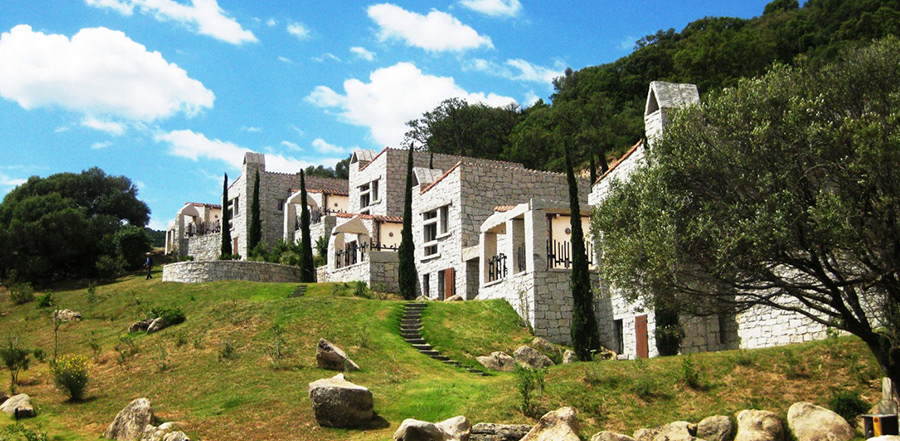
Li Conchi Houses
ABOUT US
Born from a dream of living completely immersed in the nature of Sardinia near the wonderful beaches, our village offers a unique holiday experience, and houses that allow you to live the splendid island in tranquility and comfort.
Rama Srl - Via Carloni, 48 22100 Como
VAT NUMBER 02968090130
